
 Make a call
 Prospectus
 Email
Email
 Whatsapp
Your week balances scheduled campus classes with independent study time. You will attend interactive lectures, but you will also need to block out hours at home to review Moodle slides and prepare for seminars. Keep the MyGBS app on your phone to track your live timetable on the move.
Your first year at GBS: What to expect and how to prepare
Not sure what to expect in your first year at GBS? This guide covers academic writing, support services, the MyGBS app, and practical tips to help you hit the ground running.
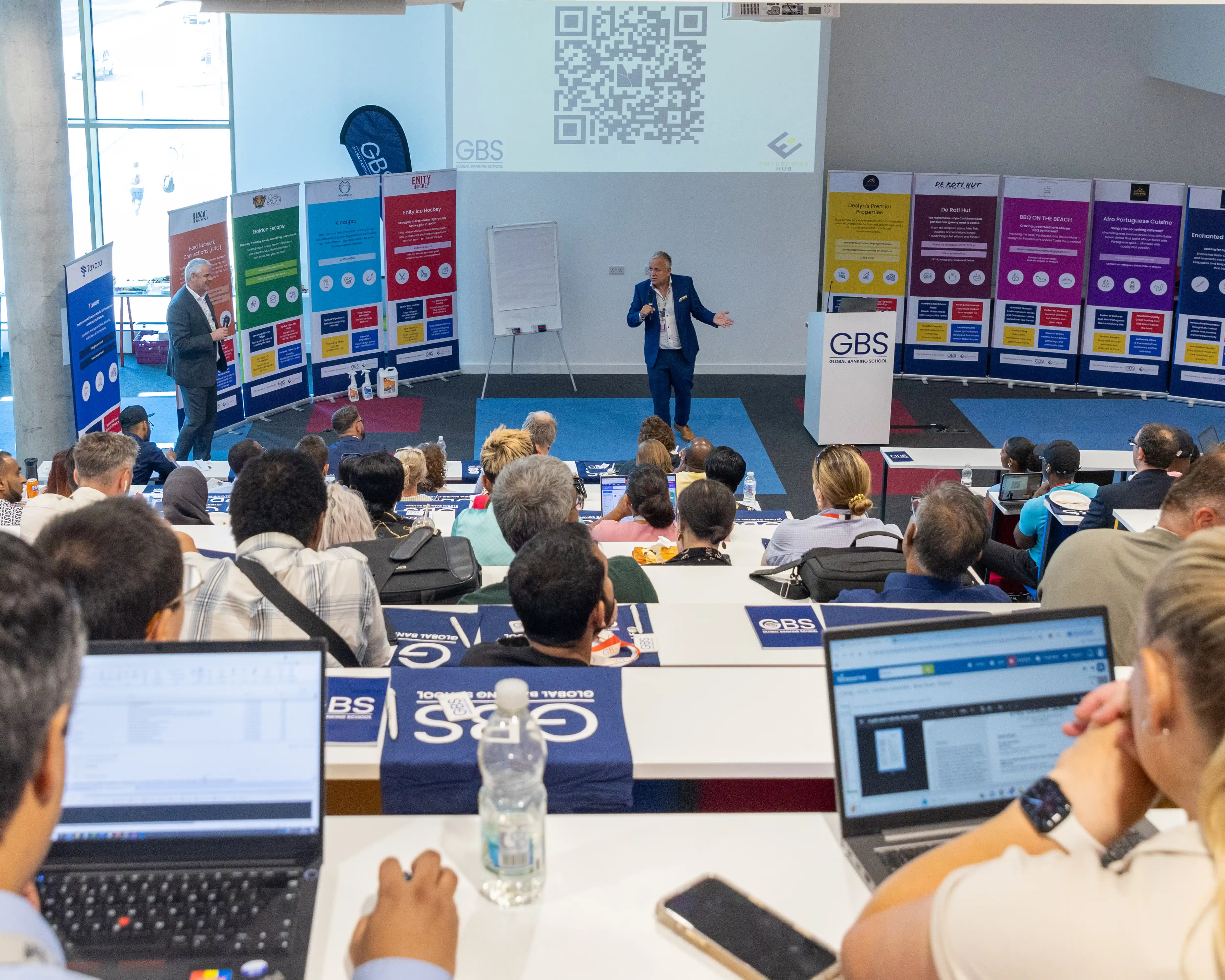
The lead-up to your first day at Global Banking School (GBS) usually comes with a lot of mental chatter. You might be figuring out how to fit classes around your current job or wondering if you even remember how to write an essay after a long break from education. Whatever your background looks like, you earned your spot here and you are fully capable of crossing the finish line.
Your first year at GBS is less about sudden academic perfection and more about getting used to a new rhythm. You will quickly find yourself navigating weekly lectures, deciphering assignment briefs and learning to map out your calendar so your study time does not collide with your personal life. Along the way, you will also discover a network of people ready to step in whenever a module gets confusing or life gets complicated.
Think of this comprehensive guide as your study buddy for that transition. Together, we will look at the day-to-day realities of life on campus, helping you understand academic writing, avoid common mistakes and get your bearings before your very first lecture even begins.
Finding your new daily routine
Your first year is less about sudden academic perfection and more about getting used to a new rhythm. Your week will be divided into two main parts: scheduled contact hours on campus and independent study time. It is important to treat independent study time exactly like a scheduled class by blocking it out on your calendar each week. This is when you read about your subject, review your lecture slides and prepare your thoughts for upcoming seminars. Two digital tools will keep you on track through this transition:
- Moodle: This is your central academic hub. Your assignment briefs, key dates, lecture slides and announcements live here. Checking Moodle regularly is the easiest way to make sure you never miss any critical updates or assignment changes.
- The MyGBS App: Think of this as your campus toolkit in your pocket. You can download the app to quickly access your timetable, check notifications and connect with student services while you are on the move.
Setting up a steady routine early will help you protect your personal life, keep up with your employment commitments and ensure your deadlines do not sneak up on you.
Learning how to write and reference
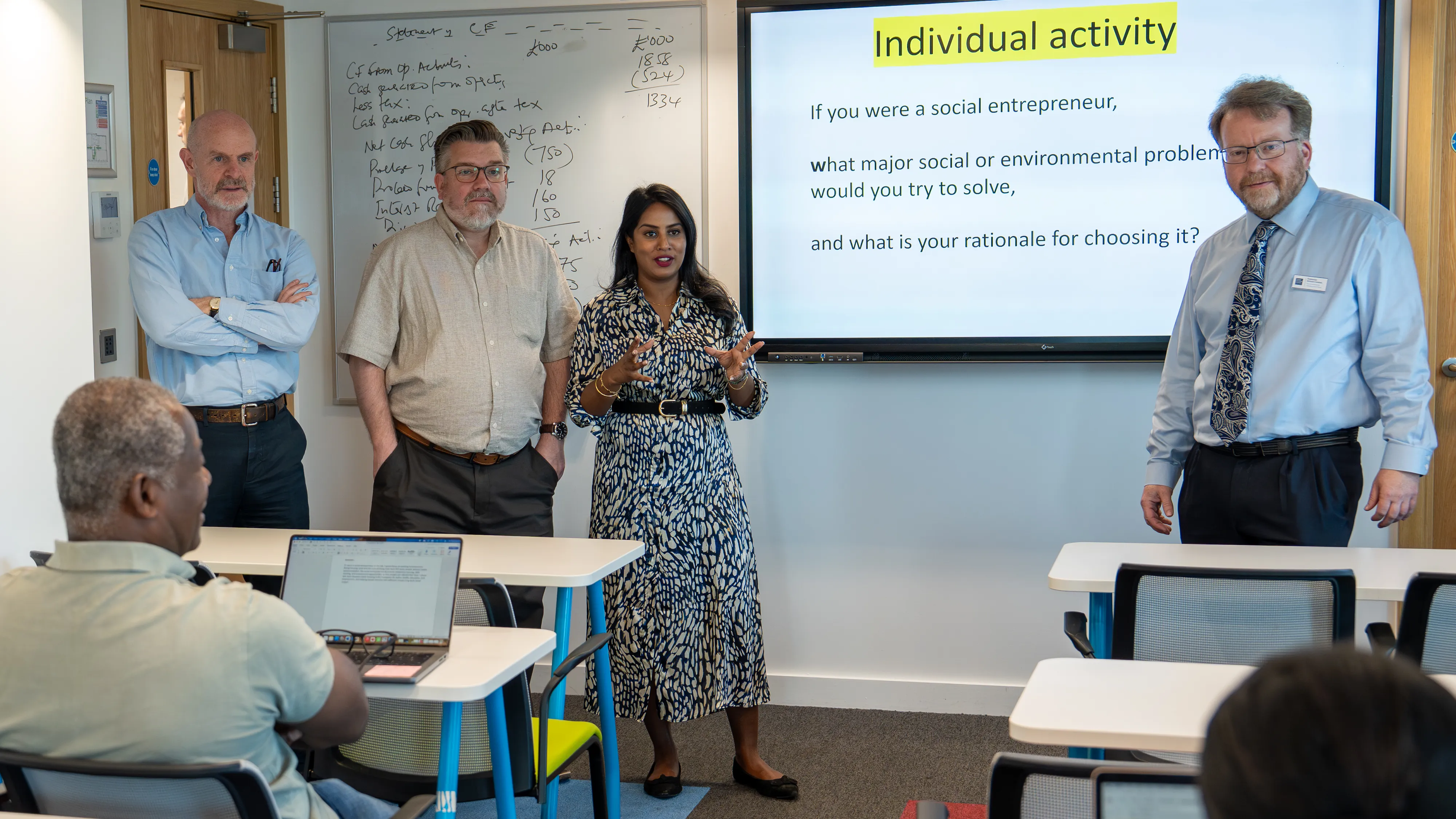
If you have never written a university essay before, the phrase English for Academic Purposes (EAP) can sound a little intimidating. It simply means the formal, evidence-based writing that universities expect: structured arguments, referenced sources, clear analysis and measured language. This is quite different from how you might write an email, a social media post or even a report at work. The good news is that academic writing is a practical skill and like any skill, you can master it with practice.
The core principles of EAP
To get you started, you can rely on a few central rules provided by Ross Broadbent, a Study Skills Lecturer at GBS:
- Be clear, not clever: Academic writing values precision over flowery language. Say what you mean and say it directly.
- Every claim needs evidence: If you make a point, you must support it with a source, such as a book, a journal article or a report. This is the foundation of an academic argument.
- Structure matters: A strong assignment always has an introduction that sets out what you will argue, a main body that develops your points with evidence and a conclusion that brings it all together.
When you are ready to begin, your assignment guidance on Moodle will spell out exactly what your tutors are looking for. Read it carefully before you start writing and refer back to it often. You do not have to look for sources blindly either. Your lecture slides, which are also posted on Moodle, are a superb starting point for understanding the key themes and terminology in your subject.
“Use them to identify the ideas you need to explore,” Broadbent advises. “Then follow up with the recommended texts and journals your tutors have signposted. These reading lists are curated specifically for your course; they are your academic foundation.”
Using AI tools: What you can and cannot do
Artificial intelligence (AI) tools such as ChatGPT, Gemini, Perplexity or Claude are widely available and you will almost certainly use them at some point during your studies. Used well, they can be genuinely helpful. Used carelessly, they can get you into serious academic trouble.
The key principle is this: AI should support your thinking, not replace it. Use it as you might use a study partner, to talk through ideas, check your logic or help you get unstuck. The words, the argument and the final submission must be yours.
What AI can legitimately help with:
- Brainstorming ideas and structuring your thinking before you write.
- Explaining a concept you found confusing in a lecture.
- Checking your grammar and sentence structure.
- Getting feedback on whether your argument flows logically.
What AI cannot and should not do for you:
- Write your assignment: Full stop. Submitting AI-generated text as your own work is academic misconduct, treated by universities in the same way as plagiarism. The consequences can be serious, including failing the module or worse.
- Provide reliable academic references: AI tools frequently invent citations that do not exist. Never use a reference from an AI tool without verifying it independently.
- Replace your own analysis: Your tutors want to know what you think, supported by evidence. An AI cannot think in your voice or draw on your experiences and understanding.
If you are ever unsure whether a particular use of AI is acceptable, ask. Your Study Skills Lecturers are an excellent first port of call and your module tutor will always be able to clarify what is permitted for a specific assignment.
Plagiarism: What it is and how to avoid it
Plagiarism means presenting someone else’s work or ideas as your own, whether you do it deliberately or accidentally. GBS takes this very seriously, but the solution is straightforward: always acknowledge your sources. Make sure you watch out for these common pitfalls:
- Copying text directly from a source without using quotation marks or giving attribution.
- Paraphrasing someone else’s idea too closely without acknowledging them.
- Forgetting to add a reference after a quote or paraphrase.
- Reusing work you have already submitted for a previous assignment is known as self-plagiarism.
1. In-text citations
These appear within the body of your assignment immediately after any quote, paraphrase or idea drawn from a source. They include the author’s surname and the year of publication, such as:
Research suggests that first-generation students often underestimate the support available to them (Smith, 2021).
If you name the author directly in your sentence, it looks like this:
Smith (2021) argues that first-generation students often underestimate the support available to them.
For direct quotes, you must also add the page number, like this: (Smith, 2021, p. 47).
2. The reference list
This appears at the very end of your assignment and gives the full details of every single source you cited.
- A book reference looks like this:Smith, J. (2021) Navigating Higher Education. London: Academic Press.
- A journal article reference looks like this: Jones, A. and Patel, R. (2019) ‘Widening participation and academic confidence’, Journal of Higher Education, 15(3), pp. 112–128.
To keep these rules handy, you can find the institution's official Harvard referencing guide directly on Moodle. Study Skills Lecturers also run dedicated sessions on referencing throughout the year. If you are struggling with your drafts, booking into one of these sessions is a great way to build your confidence early. It is one of our most attended sessions for a reason.
Finding people who have your back

One of the biggest differences between students who thrive and those who struggle is knowing when to ask for help. You are never expected to figure everything out on your own and you have an entire network of people ready to step in. Here is a quick directory of who to message when you need a hand:
- Student Success Tutors: These are your direct points of contact for academic concerns. They help you stay on track, talk through worries about your progress and connect you with resources.
- Study Skills Lecturers: They run workshops and one-to-one sessions covering everything from essay writing and referencing to time management.
- Retention Officers: If life outside of the classroom is making your studies harder, these are the people to talk to. They help you deal with challenges before things become difficult.
- The Wellbeing Team: They support your mental and emotional health. University involves a shift in your routine and reaching out to them early is a great way to look after yourself.
- he Customer Service Team and Faculty Admin: They handle the practical side of your student experience, including enrolment queries, deadlines and group changes.
Start your first year with confidence
It is completely normal to arrive with a few lingering worries about making the jump. You might wonder whether your qualification is fully recognised and where it will lead you career-wise. All GBS degrees are fully accredited and recognised by employers and institutions alike. Whether you are starting with a foundation year or jumping straight into a degree, you are building standard academic skills and subject knowledge designed to lead directly to your chosen program. GBS graduates regularly move directly into careers in business management, operations, marketing and entrepreneurship.
Explore undergraduate and postgraduate programmes offered by GBS to take your first step toward campus life.
FAQs about starting your first year at GBS
Q1. How will my weekly timetable and classes actually work?
Q2. What happens if I fall behind on my work?
Contact your Student Success Tutor as soon as you notice the problem. They are there to help you get back on track, not to judge you for asking. Acting early makes a real difference.
Q3. Can I use AI tools for my assignments?
You can use AI tools to help organise your thinking, explain concepts or check your writing. You cannot submit AI-generated text as your own work. If you are unsure about a specific use, ask your module tutor before you submit.
Q4. What should my family expect during my first year?
They will see you adapting to a busy new routine. Because deadlines come around fast, having a quiet space to focus during your study blocks is a massive help. If balancing family and university life ever feels heavy, our on-campus wellbeing team is always here to support you.
Q5. Are GBS degrees recognised by employers?
Yes. GBS degrees are fully accredited by renowned UK universities and recognised by employers across sectors in the UK and internationally. Your qualification reflects real, substantive academic achievement.
All our courses/classes are subject to availability.