
 Make a call
 Prospectus
 Email
Email
 Whatsapp
The most useful degree is the one that fits your current experience and career direction. HNDs support quick entry into work, bachelor’s degrees support graduate progression and master’s degrees support senior roles.
How to choose the right business degree for your career goals
Are you unsure about which business degree to choose? Learn how HNDs, bachelor’s and master’s degrees lead to different careers. Discover how GBS supports your academic journey.
Did you know that a business degree is one of the most common study choices in the UK? In the academic year 2023–24, 595,620 students enrolled in business and management programmes across different qualification levels. More than any other subject area. The reason is simple and practical. Business skills transfer across industries, roles and career stages, giving students flexibility as their working lives evolve.
But when it comes to choosing a degree, it is not about picking the most popular option. You have to find a programme that fits your academic timeline and aligns with your long-term career goals. In this guide, we address some of the most asked questions by students to help you choose a business degree that is perfect for you.
Questions to ask yourself
Before looking at course titles or institutions, it is important to pause and reflect. Most students who feel uncertain are not confused about the business degree itself. They are unsure about fit, pace and outcomes. Start with these practical considerations:
- Where are you in your career today, and what experience do you already have?
- How much time can you realistically commit alongside work or family?
- Do you want to enter the workforce quickly or build towards senior roles?
- Which level of academic study do you feel ready to take on right now?
There is no right order to follow when it comes to answering these questions. What matters is choosing a pathway that supports progress without adding unnecessary pressure on you.
Levels of business degrees
Business qualifications are offered at different academic levels, each designed to support specific career stages. Understanding the difference will help you avoid overcommitting or underselling your potential.
Higher National Diploma (HND)
An HND is a practical qualification focused on workplace-ready skills. It suits students who want to enter employment quickly or prefer applied learning over theory-heavy study.
HNDs in business are popular among students returning to education, changing careers or building confidence before progressing further. They can also lead into the final year of a bachelor’s degree with a top-up degree.
Bachelor’s degree (BA or BSc)
A bachelor’s degree provides a broader understanding of business functions. It includes the study of subjects such as management, finance, operations and strategy. This undergraduate business programme balances academic learning with practical application.
Master’s degree (MSc)
A master’s degree is an advanced postgraduate degree. It is designed for students with prior academic or professional experience. A business master's degree focuses on advanced knowledge, leadership capability and strategic thinking.
MSc business programmes support progression into senior, specialist or leadership roles. They are commonly chosen by working professionals or recent bachelor's degree graduates aspiring to accelerate their career growth or pivot into higher-responsibility positions.
HND vs bachelor’s vs master's degree
| What to consider | Higher National Diploma (HND) | Bachelor’s degree (BA/BSc) | Master’s degree (MSc) |
|---|---|---|---|
| Who it suits | Students who want a practical start, are returning to study or want to build confidence step by step. | Students ready for a full undergraduate experience and broader business grounding. | Professionals or graduates looking to deepen expertise or move into senior roles. |
| Entry requirements | Have a Level 3 qualification or an Access to Higher Education certificate. | Have a Level 3 qualification equivalent to 80 UCAS tariff points only. | A bachelor's degree or equivalent qualification. |
| Study focus | Hands-on, skills-based learning linked to real workplace tasks. | Balanced mix of theory and practical application. | Advanced, strategic and analytical learning. |
| Length of study | Usually 2 years. | Usually 3 to 4 years. | Usually 1 to 2 years full-time. |
| Academic intensity | Structured and supportive, with gradual progression. | Moderate, with increasing independence over time. | High, with a greater expectation of independent study. |
| Assessment style | Coursework, practical assignments and projects. | Essays, presentations, group work and exams. | Research-led assignments, case studies and projects. |
| Career outcomes | Entry-level roles, supervisory positions or progression to a bachelor’s degree. | Graduate roles, management pathways, and sector flexibility. | Senior, specialist or leadership roles. |
| Flexibility for progression | Can lead to the final year of a bachelor’s degree with a top-up degree. | Can lead directly to employment or progress to a master’s degree. | Focused on career advancement rather than further academic progression. |
| Confidence building | Strong support for students easing back into education. | Develops independence and professional confidence. | Builds leadership confidence and decision-making capability. |
Types of business degrees
There are several business degrees with different specialisations and not all lead to the same kind of work or learning experience. While they share core business foundations, each pathway emphasises different environments, challenges and ways of thinking. Choosing between them comes down to understanding the kind of problems you want to work on and your career goals.
Global business
Global business degrees focus on how organisations operate across countries, cultures and regulatory systems. You study how decisions are shaped by international markets, global supply chains and cross-cultural teams.
A bachelor’s or master’s in global business supports careers where work regularly crosses borders. It could be through multinational organisations, international clients or global operations. It is a great way to navigate different perspectives and build an international career.
Global business and entrepreneurship
Global business and entrepreneurship degree combines core business knowledge with an emphasis on innovation, venture creation and problem-solving. Alongside learning how organisations operate, you explore how new ideas are developed, tested and scaled.
It supports careers in startups, business development, innovation teams and self-employment. It is a great pathway if you want to start a business in the UK and create something of your own while still building strong business foundations.
Business and tourism
Business and tourism degrees focus on service-led industries where customer experience, operations and people management play a central role. You study how businesses operate in sectors shaped by movement, demand patterns and global trends.
This pathway supports careers in hospitality, travel, events and destination management. This is the degree for you if you are interested in people-facing industries and environments where service quality and operational coordination matter every day.
Business and management
Business and management degrees provide a broad understanding of how organisations function. You study leadership, operations, finance, strategy and people management, building skills that apply across many sectors.
This pathway supports a wide range of roles, from team leadership to operational and management positions. This degree is for you if you want career flexibility and a strong foundation that can adapt as your interests evolve.
Why study a business degree at GBS
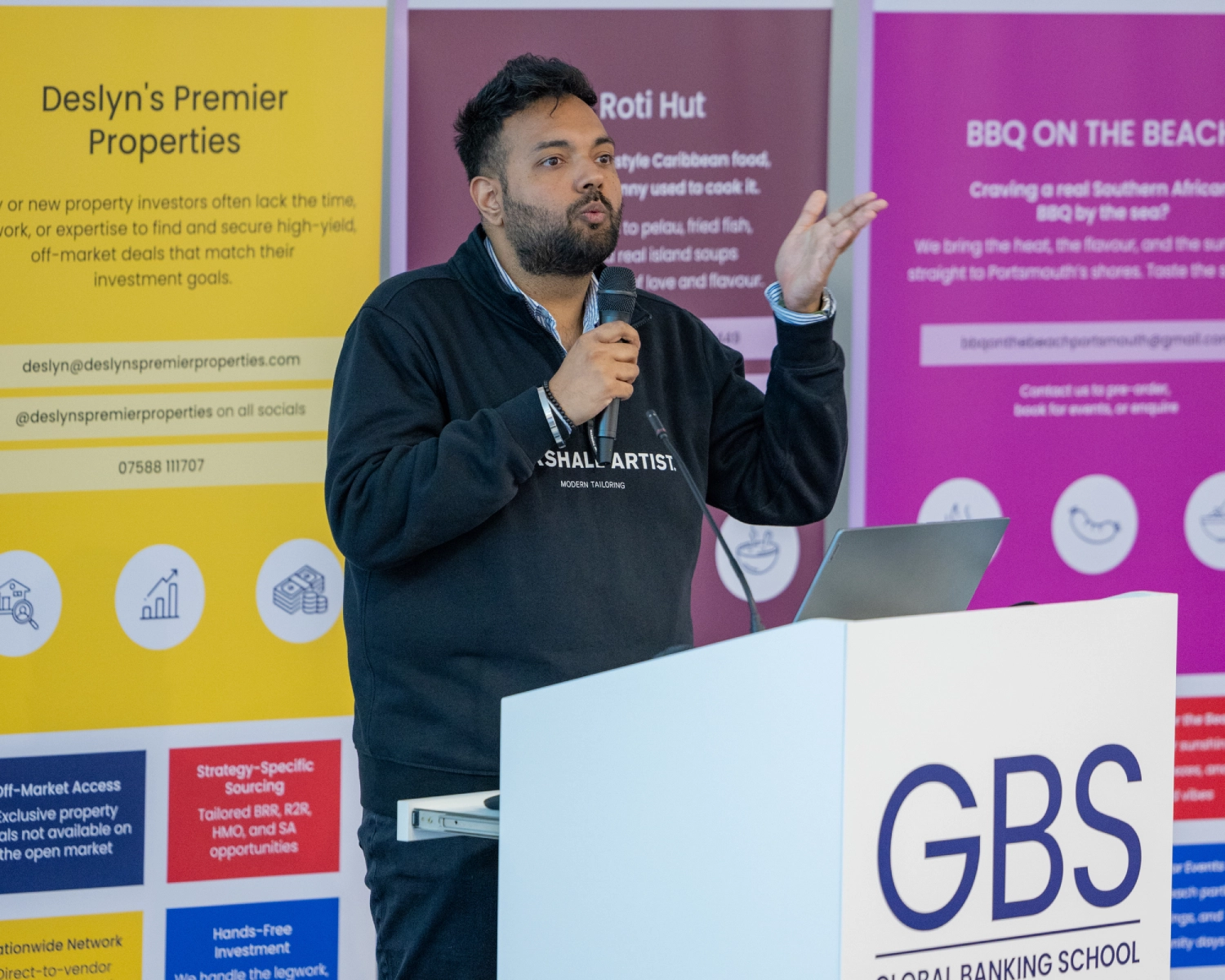
A business degree gives you skills that stay relevant as your career changes. You learn how organisations work, how decisions are made and how to manage people, processes and priorities. Studying at Global Banking School (GBS) means developing these skills in a supported environment that keeps learning practical and career-focused. You will benefit from:
- Academic and study support: Support with essays, referencing, presentations and assessments, access to tutors, module leaders and the Academic Support team.
- Career and employability support: Guidance from the Careers and Employability team, one-to-one careers consultations for CVs, applications and interviews, access to the Careers and Placement Hub.
- Wellbeing and personal support: Confidential wellbeing support for emotional and personal challenges, access to guidance and resources when needed, and a study environment that recognises wellbeing as part of academic and personal success.
Choosing a business degree is a personal decision shaped by experience and future plans. The right course supports steady progress, practical learning and long-term career goals. Explore business courses at GBS that align with your goals and study in an environment designed to support your journey at every stage.
FAQs about how to choose the right business degree for your career goals
Q1. What business degree is most useful?
Q2. How do I know which business suits me?
Consider your experience level, time commitment and career goals. Speak with an academic or career adviser at GBS to find the right path for you.
Q3. What are the different types of business degrees?
Common options include global business, business and management, entrepreneurship-focused programmes and sector-specific degrees such as business and tourism.
Q4. How does GBS help with finding jobs?
GBS offers careers guidance, CV support, interview preparation, employer connections, placements and ongoing access to careers resources during and after study.
Q5. Can I change my study level later?
Many students progress from HND to bachelor’s or from bachelor’s to master’s study as their confidence and career goals develop. You can do the same.